
Visit Our Location
275 4th Ave, Brooklyn, NYHours: Mon-Thurs: 9-8PM
Fri: 9-6PM Sat: 11-4PMInspira | Brooklyn
Craniosacral Therapy
Craniosacral therapy in Park Slope, Brooklyn
Craniosacral therapy (CST) uses light touch on the skull, spine, and sacrum to release tension in the central nervous system. At Inspira Physical Therapy in Park Slope, Brooklyn, our licensed physical therapists use CST to treat migraines, chronic pain, TMJ, post-concussion symptoms, and nervous system disorders.
Sessions are 55 minutes, one-on-one, fully clothed, and deeply relaxing. CST can be used on its own or combined with visceral manipulation, pelvic floor therapy, or clinical Pilates depending on your treatment plan.
What is craniosacral therapy?
Craniosacral therapy is a gentle, hands-on treatment developed from osteopathic medicine. It focuses on the craniosacral system, the membranes and cerebrospinal fluid that surround and protect your brain and spinal cord.
Therapists apply very light pressure to the bones of your head, spinal column, and sacrum. This releases restrictions in the connective tissue (fascia) and allows your central nervous system to function without interference.
The technique was refined by Dr. John Upledger, an osteopathic physician, in the 1970s. It is now practiced by physical therapists, occupational therapists, chiropractors, and osteopaths across the U.S. and internationally.

What does craniosacral therapy treat?
Craniosacral therapy is used alongside conventional physical therapy for a wide range of conditions affecting the nervous system, musculoskeletal system, and connective tissue.

Conditions we treat with CST at Inspira:
- Migraines and chronic headaches
- Chronic neck and back pain
- TMJ (temporomandibular joint) disorders
- Post-concussion symptoms and traumatic brain injury
- Fibromyalgia
- Chronic fatigue
- Central nervous system disorders (MS, Parkinson’s)
- Stress and tension-related disorders
- POTS and dysautonomia
- Scoliosis
- Pelvic floor dysfunction
- Ehlers-Danlos syndrome and hypermobility
- Motor coordination impairments
- Somatic manifestations of trauma
Many patients seek craniosacral therapy after other treatments have not provided lasting relief. CST is especially useful for conditions with a nervous system component that standard orthopedic and neurological approaches miss.
What to expect during your session

Before your session: Your Inspira physical therapist will begin by reviewing your health history, current symptoms, and treatment goals in detail. We recommend wearing comfortable, loose-fitting clothing since you will remain fully clothed throughout the session.
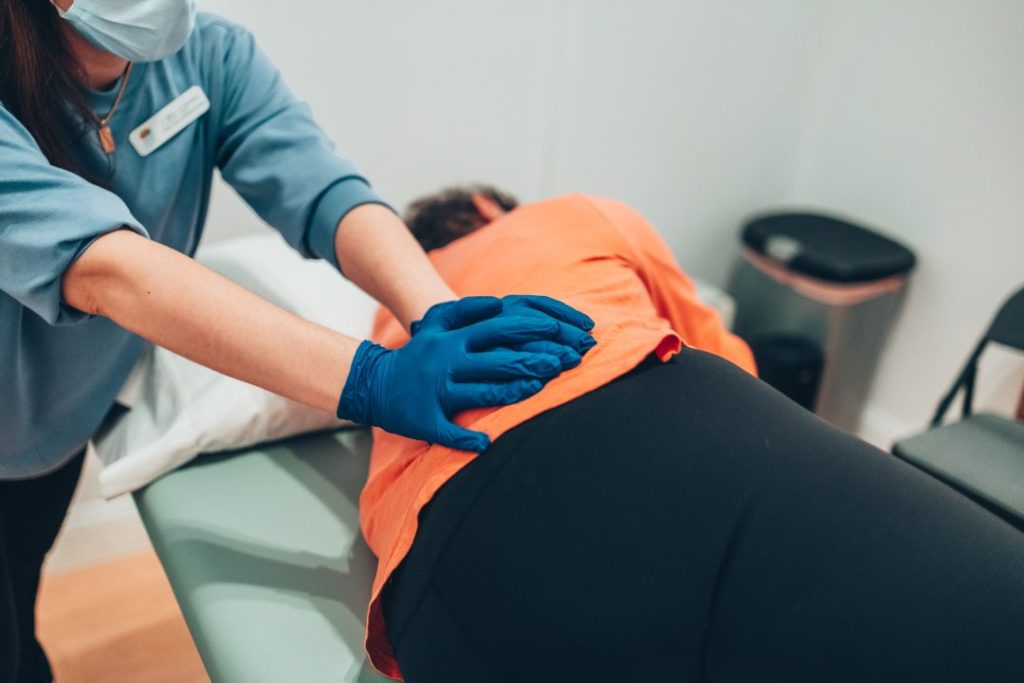
During the session: You lie on a padded treatment table in a quiet, private room. Inspira therapist place their hands lightly on your head, spine, and sacrum to evaluate your craniosacral rhythm and locate areas of tension. The touch is so light most patients fall asleep.
After your session: Some patients feel immediate relief. Others notice improvements over the following 24 to 48 hours as their body processes the treatment. You may feel deeply relaxed, slightly lightheaded, or unusually calm. Drink water and avoid intense exercise for the rest of the day.
Session length: 55 minutes, one-on-one with your therapist. No aides, no shared rooms, no interruptions.
Frequency: Most patients start with weekly sessions for 4 to 8 weeks. Your Inspira therapist will adjust frequency based on your response. Some patients transition to biweekly or monthly maintenance sessions.
How Craniosacral Therapy Works
Your body compensates for stress, injury, and repetitive movement by tightening connective tissue around your brain and spinal cord. Over time, these restrictions create pain, dysfunction, and nervous system dysregulation.
During CST, your therapist monitors the craniosacral rhythm, the subtle pulse of cerebrospinal fluid circulating through your craniosacral system at roughly 6 to 12 cycles per minute. By palpating specific points on your skull, spine, and sacrum, the therapist identifies areas of restriction and uses light-touch techniques to release them.
This differs from massage or chiropractic adjustment. There is no deep pressure, no joint cracking, no forceful manipulation. The goal is to normalize the environment around your brain and spinal cord so your body can self-correct.

Craniosacral Therapy Research and Studies
Craniosacral therapy is a growing area of clinical research. The evidence base is still developing, and results are mixed, but several studies show promising outcomes for specific conditions.
Chronic pain: A 2019 systematic review and meta-analysis of 10 RCTs (681 patients) published in BMC Musculoskeletal Disorders found that CST produced significant effects on pain intensity and functional disability in patients with chronic pain, with effects lasting up to six months (Haller et al., 2019).
Chronic neck pain: A randomized sham-controlled trial found CST was both specifically effective and safe in reducing neck pain intensity and may improve functional disability and quality of life up to 3 months after intervention (Haller et al., Clinical Journal of Pain, 2016).
Post-concussion recovery: A 2017 case series published in Medical Acupuncture demonstrated that combining craniosacral therapy with visceral manipulation reduced pain, improved cervical range of motion, and increased sleep quality in retired NFL and CFL players with post-concussion syndrome (Wetzler et al., 2017).

2024 systematic review: A 2024 systematic review of 15 RCTs found that CST did not produce clinically relevant changes in pain or disability for musculoskeletal disorders as a group, though the quality of evidence was rated low. The researchers noted the need for more rigorous trials with larger sample sizes (Ceballos-Laita et al., Healthcare, 2024).
CST should be used as part of a comprehensive physical therapy treatment plan. Your physical therapist will integrate it with other evidence-based techniques based on your diagnosis.
Craniosacral therapy vs. massage
Inspira patients constantly ask our therapists what is the difference between Craniosacral Therapy and Massage, so here is the short version.
|
Craniosacral therapy |
Massage therapy |
|
|
Target |
Craniosacral system (membranes and fluid around brain and spinal cord) |
Muscles and soft tissue |
|
Pressure |
Very light, about 5 grams |
Moderate to deep |
|
Clothing |
Fully clothed |
Typically undressed with draping |
|
Focus |
Central nervous system regulation |
Muscle tension and relaxation |
|
Performed by |
Licensed physical therapists, osteopaths, trained practitioners |
Licensed massage therapists |
|
Best for |
Migraines, nervous system disorders, post-concussion, TMJ, chronic pain with CNS component |
General muscle tension, soreness, relaxation, sports recovery |
CST and massage are not competing treatments. Many patients benefit from both. Your physical therapist can help determine which approach fits your condition.
History and Origins of Craniosacral Therapy
Craniosacral therapy (CST) was developed in the 1970s by Dr. John Upledger, an osteopathic physician who refined the technique based on osteopathic principles.
It focuses on the craniosacral system—the membranes and cerebrospinal fluid that protect the brain and spinal cord.
Today, CST is practiced by physical therapists, chiropractors, osteopaths, and occupational therapists across the U.S. and internationally.
Inspira Physical Therapy incorporates CST as a key part of our treatment approach, using it to address a range of nervous system and musculoskeletal conditions.
Pediatric Craniosacral Therapy
CST is safe and gentle enough for infants, children, and teens. It has been effectively used to address conditions such as colic, torticollis, developmental delays, and pediatric headaches. The light touch approach makes it an ideal option for younger patients when performed by trained practitioners. Learn more about our specialized pediatric physical therapy services that often integrate CST for young patients.
Pelvic Floor Connection
Craniosacral therapy often complements pelvic floor therapy by addressing restrictions in the connective tissue and nervous system that can impact pelvic health. Combining CST with pelvic floor techniques can enhance outcomes for conditions like pelvic floor dysfunction, improving coordination and reducing pain.

Insurance and cost
Craniosacral therapy at Inspira is provided as part of your physical therapy session. Because our craniosacral therapists are licensed Doctors of Physical Therapy, sessions are billed as physical therapy, not as alternative or complementary medicine.
Insurance: Inspira is an out-of-network provider with all insurance plans. If you have out-of-network benefits, we assist you in submitting claims for reimbursement. Many patients with PPO or out-of-network coverage receive partial or full reimbursement for their sessions. We provide upfront cost estimates before treatment so there are no surprise bills.
No prescription needed for your first 10 visits: Out-of-network patients do not need a prescription for the first 10 visits or within 30 days of their first session, whichever comes first. After that, a prescription is required.
Self-pay: Contact us for current session rates. A good faith estimate is available upon request. See our full insurance and payment information.
Brooklyn Craniosacral Therapy Frequently Asked Questions
Craniosacral therapy is a gentle, hands-on treatment that uses light pressure on the bones of the head, spinal column, and sacrum to release tension in the central nervous system. Sessions are fully clothed and deeply relaxing. CST was developed from osteopathic medicine and is used to treat pain, nervous system dysfunction, and a range of chronic conditions.
Craniosacral therapy treats migraines, chronic neck and back pain, TMJ, post-concussion symptoms, fibromyalgia, chronic fatigue, stress-related disorders, POTS, dysautonomia, scoliosis, and central nervous system conditions. It is used alongside conventional physical therapy as part of a comprehensive treatment plan.
Craniosacral therapy is provided as part of your physical therapy session at Inspira. We are an out-of-network provider, but if you have out-of-network benefits, we help you submit claims for reimbursement. Because our therapists are licensed DPTs, sessions are billed as physical therapy. Contact us for current self-pay rates and upfront cost estimates.
Craniosacral therapy targets the craniosacral system, the membranes and fluid surrounding the brain and spinal cord, using very light touch (about 5 grams of pressure). Massage therapy works on muscles and soft tissue with deeper pressure. CST focuses on the nervous system rather than muscle tension. You stay fully clothed during CST.
Inspira is an out-of-network provider with all insurance plans. Craniosacral therapy performed by a licensed physical therapist is billed as physical therapy, not alternative medicine. If your plan includes out-of-network benefits, you can submit claims for reimbursement, and we help with that process. We provide upfront cost estimates so you know exactly what to expect before your first visit.
Most patients start with weekly sessions for 4 to 8 weeks. Your physical therapist adjusts frequency based on your response. Some conditions improve in 3 to 4 sessions. Others, particularly chronic or complex conditions, may require longer treatment. Many patients transition to biweekly or monthly maintenance sessions.
Yes. Craniosacral therapy is gentle enough for infants, children, and teens. It has been used to address colic, torticollis, developmental delays, and pediatric headaches. The extremely light pressure makes it safe for younger patients when performed by a trained practitioner.
Wear comfortable, loose-fitting clothing. You remain fully clothed during the entire session. Avoid heavy belts, tight collars, or stiff fabrics that might restrict your comfort while lying on the treatment table.
Please share
Book your craniosacral therapy session
Ready to try craniosacral therapy? Inspira Physical Therapy is located at 275 4th Ave in Park Slope, Brooklyn.